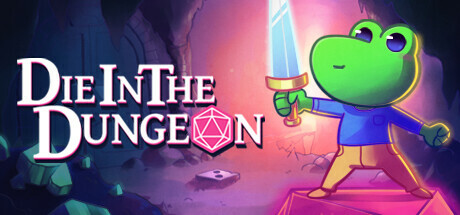
Die in the Dungeon Deckbuilder

Die in the Dungeon Guide

Stronger dice routes, safer relic picks, cleaner boss clears. Get from first-floor survival to reliable meta builds without burning runs on weak early combinations.

Read the full wiki → Start here
Dice Types
24
Relics
56
Bosses
12
Tier Entries
40+

Die in the Dungeon is a dice-based deckbuilding roguelike by ATICO, released into Steam Early Access in May 2026. Instead of cards, you build a bag of dice: you draw them each turn, place them on your board, and trigger their effects to deal damage, block attacks, heal, and apply status effects. The loop is simple — fight through floors, collect new dice and relics, upgrade your build, repeat — but the depth lives in dice synergies, relic stacking, and the placement puzzle you solve every single turn.

The cleanest winning runs protect tempo early, commit to one scaling line before the middle floors, and stop spending gold on cute side grades that do not improve the next real boss check. This hub is organized around that discipline instead of highlight-reel combinations that only work when the RNG cooperates.

With 24 dice types, 56 relics, 12 bosses, and an endless mode after Floor 12, there is a large amount to discover — and a correspondingly large amount of ways to lose a run to a build that never picked a direction. The tables below are the shortlist; the sub-site has the full data.

Dice Build Tier List

Win & pick rates

Top-performing dice combinations ranked for consistency, tempo, and boss-floor reliability.

TierDiceRoleWin %Pick %
SGolden DiceScaling68%24%
SVampire DiceSustain65%18%
AFire DiceAOE62%22%
AIce DiceControl58%15%
BPoison DiceDoT55%12%
BLightning DiceBurst52%9%

Full dice tier list →

Dice Rarity Tiers

Reference
RarityColourPower LevelExample
CommonGrayBaseline statsBasic Attack Dice (1–6 damage)
UncommonBlue+1 effect or higher baseIce Dice (1–4 + freeze)
RarePurpleUnique mechanicsVampire Dice (damage + lifesteal)
LegendaryGoldScaling or multi-effectGolden Dice (scaling min-roll)

Run Discipline

Three rules
01

Buy For The Current Board

Buy dice that improve the board you actually have, not the dream board you might never finish assembling.

02

Let Relics Confirm A Direction

Relics should confirm a build direction you are already heading toward, instead of dragging you into a new one from zero.

03

Protect Health Before Elites

Preserve enough health before elite fights so stronger rewards stay available while the deck is still forming.

Relic Priority

What to take

Relics are permanent passive bonuses collected through a run. A focused set that all buff the same strategy is dramatically stronger than a random collection of individually powerful relics.

PriorityRelic TypeWhyExample
1 — HighestDice DrawMore dice per turn means more options every single turnDice Bag+ (+1 draw)
2 — HighScalingGets stronger as fights progress, which is where runs are decidedPhilosopher's Stone
3 — MediumDice EnhancingBuffs the specific dice types you already useSharpened Edge (+2 min-roll)
4 — SituationalUtilityRerolls, extra inventory, shop effectsMerchant's Coin

Core Guides

Builds & bosses
Start here

Beginner Guide

Dice basics, the most forgiving starting setup, relic combos, and the five mistakes that end early runs.

Open guide →
Builds

Best Build Guide

The strongest scaling lines and how to commit to one before the middle floors punish indecision.

Open guide →
Synergy

Relic Synergy Guide

Which relic sets stack into a coherent plan, and which ones only look strong in isolation.

Open guide →
Bosses

Boss Guide

All 12 bosses, their telegraphs, and when to block instead of pushing damage.

Open guide →

Field Tips

Turn by turn
Placement

Placement order determines the sequence of effects. Shield Dice first to block before other dice resolve, Heal Dice last to recover damage taken during the turn.

Tempo

Keep at least one die in reserve for defense or repositioning. Dumping everything on turn one leaves you exposed to the enemy's full attack.

Relics

Each relic you take dilutes future relic spawns, because the game weights new offerings against what you already own. Skip off-plan relics.

Adaptation

If the run keeps offering one element, pivot into it. Forcing a predetermined build against what the game is handing you is the fastest way to lose.

Rooms

Heal, Shop and Rest rooms are not optional. A skipped heal room on Floor 6 is usually what ends the run on Floor 9.

Endless

Golden Dice scale into Endless Mode better than any other archetype — worth learning once you can clear Floor 12 reliably.

FAQ

Common questions
What is Die in the Dungeon?
A dice-based deckbuilding roguelike by ATICO, released on Steam Early Access in May 2026. Unlike card-based deckbuilders, it replaces cards with dice — you build a bag of dice, draw them each turn, place them on your board, and trigger effects to deal damage, block, heal, and apply status effects. It contains 24 dice types, 56 relics, 12 bosses, and an endless mode unlocked after Floor 12.
Which dice should a new player build around?
Vampire Dice as the primary damage source, Shield Dice for prevention, Heal Dice for attrition recovery, and Ice Dice to freeze enemies and delay their attacks. It is not the highest-damage setup, but it is the most forgiving — it buys you the time to learn enemy patterns and reach the mid-game floors where build-defining relics appear. On the current tier list, Vampire Dice sit at 65% win rate and Golden Dice at 68%.
Should I take every relic I am offered?
No. More relics are not always better, because each one you take dilutes future relic spawns — the game weights new offerings based on what you already own. Skip relics that do not fit your current strategy, and sell off-synergy relics at shops to fund rerolls for the ones you actually need. Prioritise dice draw first, then scaling, then dice enhancement, then utility.
Does dice placement order really matter?
Yes — it is one of the most under-appreciated mechanics in the game. The order you place dice determines the sequence in which their effects resolve, and positioning also affects which enemies are targeted. Shield Dice belong first so they block damage before anything else resolves; Heal Dice belong last so they recover whatever got through. A poorly ordered board wastes an entire turn of potential.
How far should I expect to get on my first run?
Floor 3 or 4, and that is completely normal. Death is a learning tool here rather than a failure state — each run teaches enemy patterns, dice interactions and relic priorities. Once you consistently reach Floor 6 to 8, that is the point to start optimizing: study the tier list, experiment with Golden Dice scaling, and learn boss telegraphs.

Read Next

Where to go

Want the full build breakdown?

The complete Die in the Dungeon wiki — dice tier list, build guides, relic synergies, boss patterns and the full database — lives on the sub-site with data tables and walkthroughs.

Open the full wiki →

About This Hub

GameGuideHub is a network of data-first game wikis. The Die in the Dungeon hub focuses on scaling lines, relic discipline, and boss sequencing — the three things that separate a run that ends on Floor 4 from one that reaches Endless Mode.

Pages are reviewed each patch cycle. If a guide saves you a run, you can support the project on UniFans — link in the footer.

Updated: July 2026
Build: 1.0.3
Focus: scaling lines, relic discipline, boss sequencing
Sub-site: dieinthedungeon.gguidehub.com

Last updated: July 2026