 Beginner
Realm of Ink Beginner Guide
Master ink combat mechanics, skill synergies, run progression, and survival fundamentals — the complete beginner route through the ink-wash roguelike.
Beginner
Master ink combat mechanics, skill synergies, run progression, and survival fundamentals — the complete beginner route through the ink-wash roguelike.
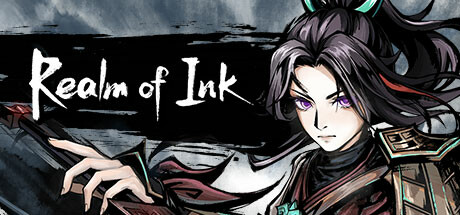
Realm of Ink is a Chinese ink-wash style action roguelike where every run is a brushstroke on an ever-changing canvas of combat. You play as a wandering swordsman wielding ink as both weapon and art. The game demands split-second reactions, build-crafting skill, and the patience to learn enemy patterns through repeated deaths. That last part matters more than most beginners expect: your first completed run will likely take somewhere in the range of ten to twenty attempts, and every one of those deaths is a lesson about enemy patterns, room layouts, or skill interactions that you cannot read your way past.
This page covers the systems you need before the depth becomes useful — how combat resources interact, what to buy first, how resonance scales, and what each act expects from your build. Once these fundamentals are stable, the deep-dive pages on the sub-site (tier list, boss phases, combo theory) start paying off instead of overwhelming you.
Combat revolves around three resources: your ink meter, your dash charges, and your skill cooldowns. The ink meter fills as you land basic attacks and as you take damage. When it fills completely it triggers Ink Overload — a super-state where damage skyrockets and skills cost zero ink. Everything else in the game is a way of feeding or spending that loop faster.
Because the meter fills from both dealing and receiving damage, playing passively is strictly worse than playing aggressively. A cautious player who never closes distance builds the meter slowly and never gets the Overload window that makes rooms trivial.
The dash is your primary defensive tool, but it is also offensive. Dashes leave ink trails that damage enemies, which means dashing through an enemy group applies damage while dashing away applies damage to nothing. Aggressive dash positioning is essential, not stylistic. The dash carries a 1.5 second cooldown, and trail damage stacks when multiple enemies cross the same trail.
Brush Strike is your basic attack. Its range and speed are determined by the equipped ink type, and it combos up to four hits. Complete the full four-hit combo whenever it is safe — the final hit deals double damage and applies an ink status effect. Beginners who cancel into a dash after two hits give up a large share of their total damage output without realising it.
Blocking within 0.3 seconds of impact is a Perfect Guard: it negates all damage and stuns the attacker for 1.5 seconds. Learn boss parry windows by practising them rather than defaulting to dodges. The stun window is long enough for a full four-hit combo, which turns a defensive read into a damage opportunity.
A full ink meter triggers +40% damage, +25% movement speed, and zero ink cost on skills for six seconds. Save your most expensive skills for Overload mode and chain two or three of them for a burst that no ordinary rotation can match. Firing an expensive skill five seconds before Overload is one of the most common beginner damage leaks.
Brush Spirit is a summoned ally that attacks independently and is upgraded at spirit shrines with ink essence. Spirits are free damage that continue working while you reposition, so summon one early and feed every essence you find. The value compounds across an entire run, which is why spirit-damage upgrades are worthless before you actually have a spirit summoned.
| Mechanic | How It Works | Beginner Tip |
|---|---|---|
| Ink Dash | Press dash to leave an ink trail that damages enemies. 1.5s cooldown. | Dash through enemy groups, not away from them. Trail damage stacks with multiple enemies. |
| Brush Strike | Primary attack; range and speed depend on equipped ink type. Combos up to 4 hits. | Finish the full 4-hit combo when safe — the final hit deals 2x damage and applies ink status. |
| Ink Skills | Equip up to 4 ink skills. Each has a cooldown and ink cost. Skills drop as scrolls. | Do not skip skill rooms. A strong skill synergy in Act 1 carries the entire run. |
| Ink Resonance | 2+ matching ink colours trigger bonus effects. 2 = minor, 4 = major transformation. | Aim for at least 2 matching ink skills by the end of Act 1. Full 4-colour resonance is a late-run goal. |
| Brush Spirit | A summoned ally that attacks independently. Upgraded at spirit shrines with ink essence. | Spirits are free damage. Summon one early and feed every essence you find. |
| Parry / Perfect Guard | Blocking within 0.3s of impact negates all damage and stuns the attacker for 1.5s. | Practise boss parry windows instead of dodging. The stun is long enough for a full combo. |
| Ink Overload | Full ink meter grants +40% damage, +25% speed, and 0 ink cost on skills for 6 seconds. | Save expensive skills for Overload. Chain 2-3 skills for massive burst damage. |
| Story Scrolls | Narrative choices granting permanent buffs or debuffs for the rest of the run. | Choose scrolls that match your build direction. An ink-damage scroll is wasted on a melee build. |
The most reliable first-run build is balanced rather than greedy: health upgrades in Act 1, two to three ink skills in Act 2, and two-colour resonance by Act 3. A reliable two-colour resonance with strong fundamentals beats a greedy but incomplete four-colour build every single time, because an unfinished resonance contributes nothing while the health you skipped to chase it is gone permanently.
Treat the upgrade table below as an ordering, not a wishlist. The ordering matters because several upgrades are conditional — spirit damage does nothing before you have a spirit, and skill cooldown reduction does nothing while you only have one skill worth casting.
| Upgrade | Why | When To Take |
|---|---|---|
| Health Flask (+25% Max HP) | Survivability is everything on your first run. You will take hits while learning boss patterns. | First shop visit, no exceptions. Buy before any skill or weapon. |
| Dash Cooldown Reduction | A 0.5s reduction is massive. More dashes means more ink trails means more passive damage. | Second priority after health. Take at the first upgrade shrine. |
| Basic Attack Speed +15% | Faster attacks complete combos faster and build the ink meter sooner. | After the dash upgrade. Can be swapped with skill cooldown if needed. |
| Skill Cooldown −20% | Lets you use ink skills more frequently to clear rooms. | Act 2 onwards, once you have 2 or more good skills equipped. |
| Brush Spirit Damage +30% | Free passive damage for the rest of the run. | After you have a spirit summoned. Useless before then. |
| Ink Resonance Bonus +1 | Counts as an extra matching colour, so 3-colour resonance triggers at only 2 equipped. | Late Act 2 or Act 3 when building toward resonance. |
Focus on collecting two to three skills, one spirit, and the health flask. The act boss, the Brush Demon, has three attack patterns: a sweeping ink wave you jump to avoid, a targeted ink bolt you dash sideways to dodge, and a spirit summon whose adds you should kill immediately. Defeating him for the first time unlocks Blue ink.
By this point you should have four ink skills and a clear build direction. The Archivist summons minions and uses area-denial attacks, which punishes players who have not settled on a way to handle groups. Beating him unlocks Red ink.
Enemy density doubles. The Mountain Sage requires parry mastery: he has a five-hit combo and you must parry at least two of those hits to avoid massive damage. This is the fight that separates players who practised Perfect Guard from those who only dodged. Defeating him unlocks Gold ink.
The final challenge, ending with the Elder Ink Dragon. Enemy HP pools are large enough that damage-over-time alone is insufficient, so builds that carried you through Acts 1-3 on burn spread need a direct-damage answer here. Clearing Act 4 on Normal is what unlocks Nightmare difficulty, which adds new boss attack patterns and cuts telegraph windows by 25%.
The full Realm of Ink wiki covers the complete build tier list with relic loadouts, per-boss phase breakdowns, ink combo theory, secret rooms, and the Soul Ink tree.
This beginner page is the entry point of the GameGuideHub Realm of Ink hub. It is written for the first ten runs — the stretch where mechanics matter more than optimisation and where most players quit.
Once you clear Act 4 once, move to the build tier list and the boss guide on the sub-site, where the same systems are treated as levers to optimise rather than rules to learn.
Last updated: July 2026
Covers: combat, upgrades, acts 1-4
Sub-site: realmofink.gguidehub.com